Executive Summary
Jarvis is a modular research intelligence system designed to help instructional designers retrieve relevant academic literature without overload, drift, or loss of credibility.
It automates structured weekly searches, flags high-value research, detects conceptual drift, and requires explicit human approval before adoption. The system prioritizes transparency and traceability over speed.
This project demonstrates systems thinking, ethical AI integration, evaluation-driven design, and workflow transparency, all of which are suitable for research-driven environments.
The Problem
Instructional designers working in evidence-based environments face three recurring challenges:
- Literature overload: Searches return hundreds of results with low instructional relevance.
- Concept drift: Automated searches slowly drift away from the original research focus without warning.
- Low trust in AI outputs: Black-box tools hallucinate citations, over-generalize findings, or hide uncertainty.
Jarvis addresses these problems by prioritizing traceability, transparency, and human oversight at every stage of the workflow.
The Solution
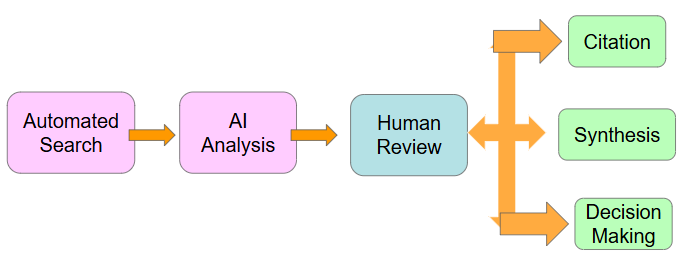
- Modular Queries
Separate research streams prevent cross-contamination and allow targeted refinement. - Automated Weekly Runs
Each module executes on a schedule, producing structured analyses rather than raw citation lists Every run produces a weekly overview, a high-value relevance flag, and a drift check. - Human Review Gate
All outputs require explicit human approval before citation or downstream use. - Logged Outputs
Logs are automatically generated to support audit, reflection, and iteration.
Evidence of Impact
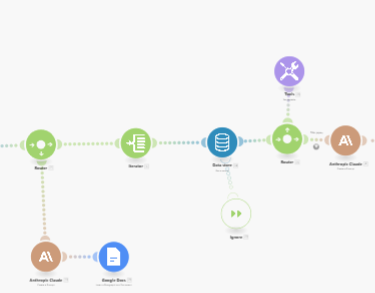
- Reduced low-value abstract review
- Identified persistent gaps
- Prevented silent scope drift
- Created an auditable workflow
Tools
Make • Claude Sonnet • Semantic Scholar • Structured logging
Skills Demonstrated
- Systems Design
- AI governance
- Evaluation thinking
- Workflow documentation
To explore more of my portfolio, click on one of the modules below.